I presented my research paper “Found in Data Translation: Uncovering Stories of Software Use through Born-Digital Files” in ACADIA 2024 Conference in Banff, Canada. The paper presents a data-driven workflows for eliciting and structuring metadata of born-digital files to tell stories of practice.
Abstract
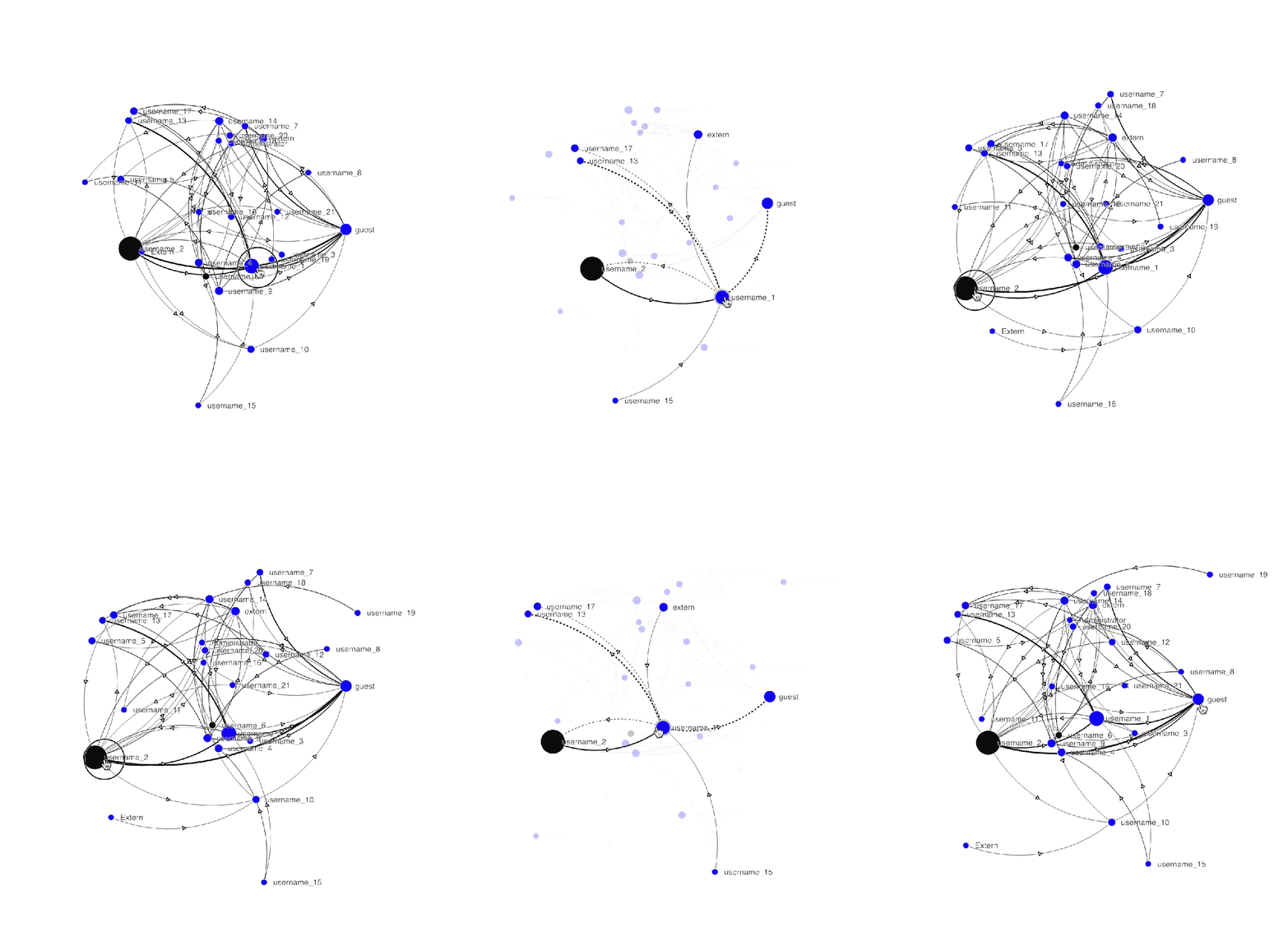
Historical computer-aided design files, shared among collaborators during project development, archive information about the social and material organization of architectural work. Activating the work traces hidden in file metadata can provide insight into the digital architectural practices of the late 1990s and early 2000s. Based on this hypothesis, this paper presents a computational, data-driven methodology for studying historical software practices through born-digital architectural archives. In response to the challenge of accessing and interpreting born-digital material, it proposes eliciting metadata from files to weave stories of software use. The paper begins by framing the proposed methodology at the intersection of material culture and digital humanities. It then presents a data translation workflow that uses digital history methods –namely, metadata structuring, database construction, and data querying and visualization– to access, structure, and display file data. The paper discusses and reflects on the proposed framework through a particular case study: the project records of the BMW Welt by COOP HIMMELB(L)AU, available in the Canadian Centre for Architecture collections. Drawing connections across file data, the paper reports stories from the architectural office and suggests how these can enrich the historical narratives around design software. Ultimately, the paper proposes that revealing lesser-known contributors, tasks, and exchanges within architectural projects contributes to a more inclusive history of computer-aided design software, which, in turn, can inform the design of new technologies.
 Eliza Pertigkiozoglou